
Cold Process Soap, Soap Recipes
Beginner’s Hot Process Soap Recipe
Oct
Beginner’s Hot Process Soap Recipe
Palm Oil and Coconut Oil – 1 kg Oil Batch
This beginner-friendly hot process soap recipe uses palm oil for hardness and coconut oil for cleansing and lather.
Ingredients
- 800 g Palm Oil – Shop at Fun with Soap
- 200 g Coconut Oil – Shop at Fun with Soap
- 142.82 g Sodium Hydroxide (NaOH) – Find Sodium Hydroxide at Fun with Soap
- 300 g Distilled Water – Visit Fun with Soap
Equipment Needed
- Digital scale
- Slow cooker
- Stick blender
- Stainless-steel spoon or silicone spatula
- Suitable heat-resistant containers
- Safety goggles and chemical-resistant gloves
- Spirit-Filled Thermometer
- Long-Spouted Jug
- Silicone Loaf Mould in Wooden Box – 260 × 70 × 75 mm
Step-by-Step Instructions
Step 1: Melt the Oils
- Weigh 800 g palm oil and 200 g coconut oil into the slow cooker.
- Heat on low until both oils have melted completely.
- Stir well to combine.
- Use your thermometer to monitor the temperature.
2: Prepare the Lye Solution
- Weigh 300 g distilled water into a suitable, lye-resistant container.
- Carefully weigh 142.82 g sodium hydroxide separately.
- Slowly add the sodium hydroxide to the water while stirring until dissolved.
- Allow the solution to cool sufficiently before proceeding.
Safety: Always add sodium hydroxide to water, never water to sodium hydroxide. Wear protective goggles and chemical-resistant gloves and work in a well-ventilated area. Only use a jug made from material suitable for contact with hot sodium hydroxide solution.
Step 3: Blend to Trace
- Carefully pour the lye solution into the melted oils.
- Use a stick blender in short bursts, alternating with stirring.
- Continue until the mixture reaches trace, resembling thick custard.
4: Cook the Soap
- Cover the slow cooker and cook on low.
- Stir carefully when necessary to prevent the soap from overflowing.
- The mixture will thicken and pass through several stages, eventually becoming glossy and gel-like.
- Cooking time varies depending on the slow cooker and batch conditions. Monitor the soap carefully throughout the process.
Step 5: Transfer to the Mould
- Once cooking is complete and the batch has been appropriately checked, carefully transfer the thick soap into your prepared silicone loaf mould.
- Press the soap down firmly with a suitable spatula to reduce air pockets.
- Smooth the surface if desired.
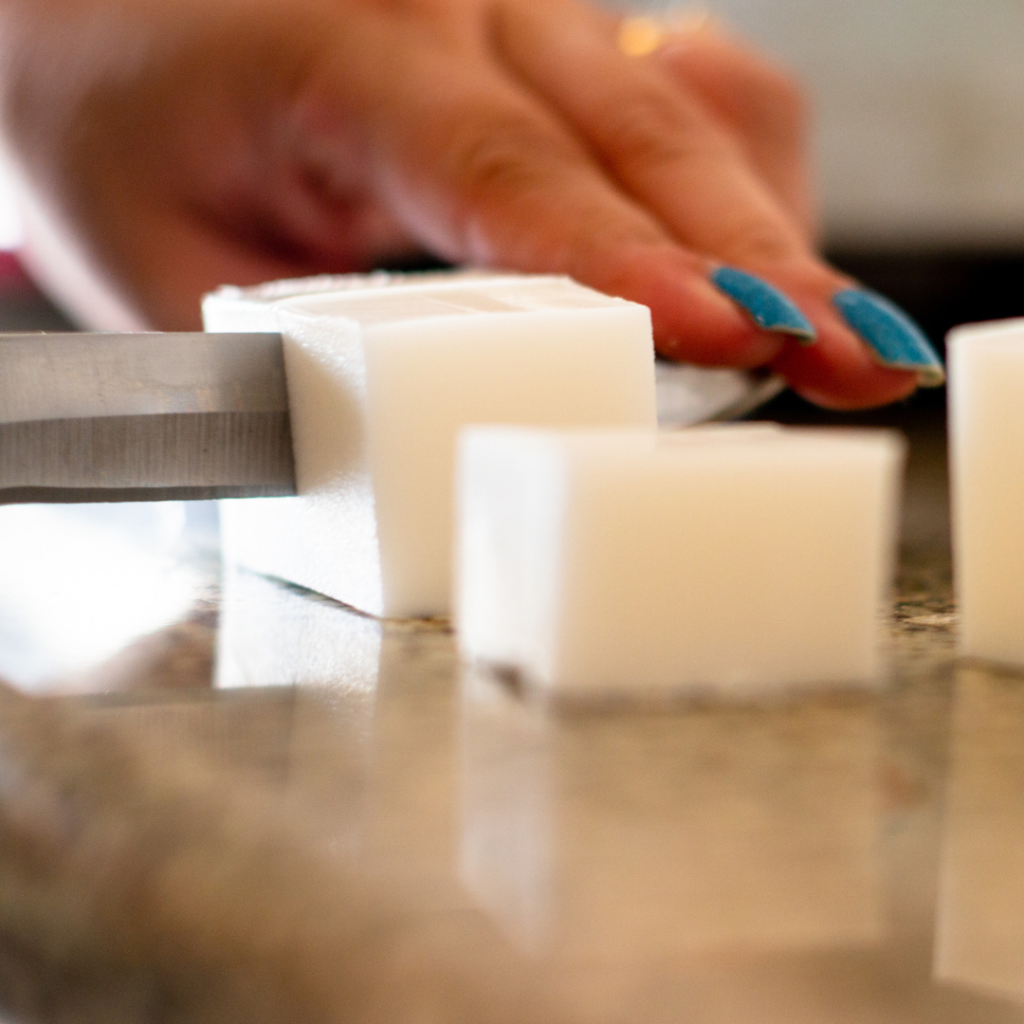
Step 6: Unmould and Cut
- Allow the soap to cool and harden.
- Remove the silicone mould from the wooden box as needed, following the mould’s design.
- Unmould when firm enough.
- Cut into bars of your preferred size.
7: Dry the Soap
Allow the bars to dry for approximately 2–4 weeks. This helps excess water evaporate and produces harder, longer-lasting bars.
Important Safety Notes
- Never use aluminium equipment when working with sodium hydroxide.
- Keep children and pets away from the soap-making area.
- Wear appropriate protective equipment when handling lye and fresh soap.
- Do not rely on cooking time or pH strips alone to establish that soap is safe.
Expected Result
A firm handmade soap bar with good cleansing properties and creamy lather. Palm oil contributes hardness, while coconut oil helps produce cleansing action and bubbles.
Enjoy making your own handmade hot process soap!
Shop Soap-Making Supplies at Fun with Soap
Visit www.funwithsoap.co.za for soap-making ingredients and equipment.
